3 Key Factors Behind India’s Stock Market Sensex and Nifty Crash Today
India's Sensex and Nifty stock indexes experienced a sharp downturn, dropping significantly and wiping out previous gains. The crash was driven by foreign investor sell-offs, rising Brent oil prices, and increased capital gains taxes.

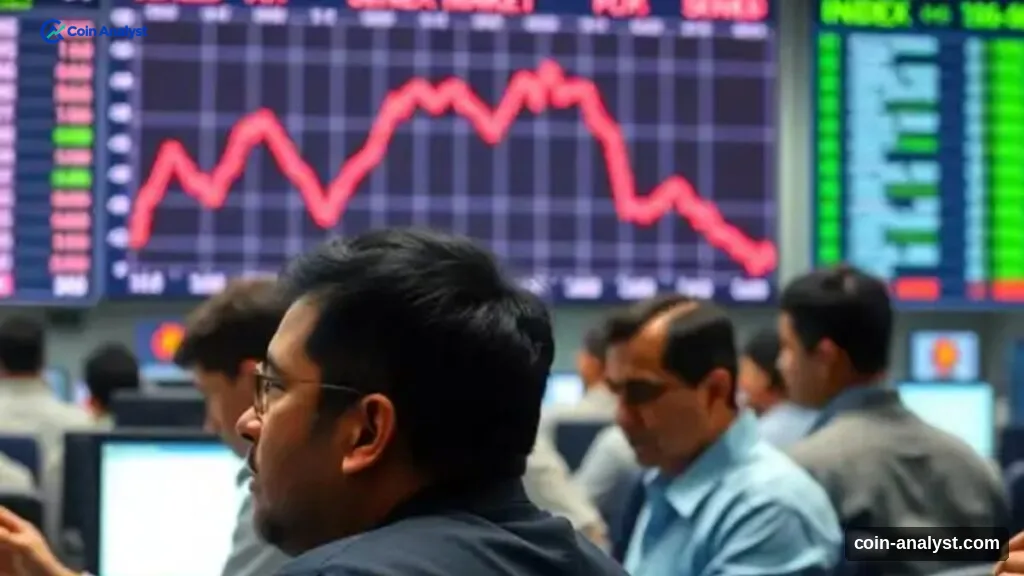
Shortly after the opening bell on Monday, India’s Sensex and Nifty stock indexes experienced a sharp downturn. During the session, the Sensex dropped by more than 1,000 points, while the Nifty tumbled 300 points. This sudden drop has taken retail investors by surprise, leaving the majority of their holdings in the red. With the Nifty sliding to the 22,800 threshold and the Sensex dropping into the 72,900 bracket, both indexes have reached levels not seen since May 2024—effectively wiping out gains and leaving the broader market stagnant over a two-and-a-half-year period.
Also Read: When Will Nvidia Stock Go Down? Here’s What Could Trigger It
Sensex and Nifty Crash: 3 Reasons India’s Stock Market Is Plunging
- Foreign Institutional Investors (FIIs) Continue To Sell: Recent trading data indicates that FIIs offloaded $384.67 million in equities on Friday. In contrast, domestic institutional investors (DIIs) purchased $295.63 million in equities. This created a closing gap of $89.04 million that has unnerved markets at the start of the week. Record-setting sell-offs by FIIs continue to heavily pressure both the Sensex and Nifty.
- Brent Oil Rises Above $106: Although crude oil dipped to $93 a barrel on Monday, Brent crude climbed to $107 following a 2.9% intraday jump, sparking anxieties over escalating borrowing expenses. This upward movement threatens to increase the cost of fuel, logistics, and commodities, which in turn fuels inflation. Because these economic factors are deeply interconnected, the fallout appears immediately in the stock market, penalizing India’s major indexes.
- The Great Tax Burden: As the foundational pillars of the Indian equities market, the Sensex and Nifty are currently standing on fragile ground. Retail participants bear the immediate brunt of these conditions, following the government’s July 2024 policy changes that raised Short Term Capital Gains (STCG) tax from 15% to 20% and Long Term Capital Gains (LTCG) tax from 10% to 12.5%. Market stability has faltered ever since, as these steep tax hikes heavily penalize traders, erode profit margins, and dampen trader sentiment overall.