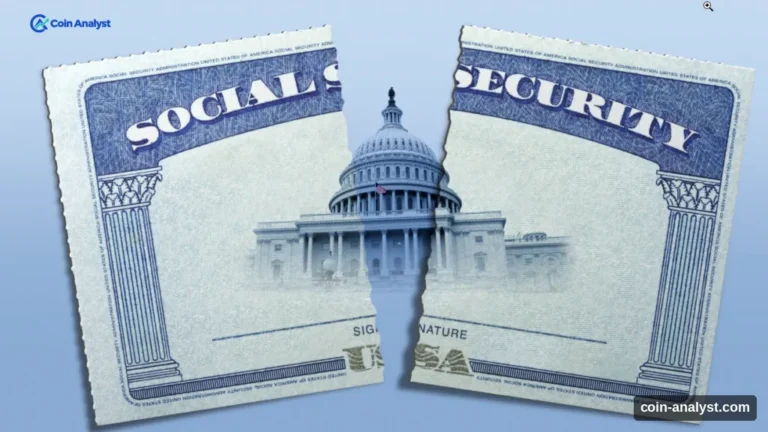
US Debt Crisis May Already Be Underway, Expert Warns
Financial Times journalist Robin Wigglesworth warns that the United States may be experiencing a chronic, slow-burning debt crisis as debt-servicing expenses reach a record $1.1 trillion in fiscal 2026.


Financial Times journalist Robin Wigglesworth warns that the United States may already be experiencing a debt crisis, though it is unfolding as a slow burn rather than an abrupt bond market crash. This assessment arrives as US debt-servicing expenses reached an unprecedented $1.1 trillion in fiscal 2026. Rather than immediately triggering a default, the national debt crisis is progressively straining the federal budget in a tightening, gradual squeeze.
Also Read: Trump’s Economic Promise in Iowa Runs Into Trouble
US Debt Crisis, Rising Interest Costs And A Slow Economic Squeeze
Wigglesworth, author of A Fabulous Debt, shared on The Long View podcast that while his anxiety regarding the US debt crisis has increased, he remains less alarmed than most.
Robin Wigglesworth had this to say:
“I think the US is maybe in the early stages of what I’d call a chronic debt crisis. It’s just very slow, very gradual.”
Why US Debt Servicing Costs Keep Climbing
This trajectory is largely driven by refinancing, as Treasury notes originally issued at rates between 1% and 3% are now rolling over at rates as high as 6%, all while the federal budget remains far from balanced. The Committee for a Responsible Federal Budget (CRFB) estimates that interest payments hit a record $1.1 trillion in fiscal 2026—amounting to 3.4% of GDP, which exceeds spending on defense or Medicare. This bill serves as the most prominent indicator of the unfolding debt crisis, with debt-servicing costs continuing on an upward path. Wigglesworth calculates the current figure slightly higher, between 3.5% and 3.6% of GDP.
He also said this:
“And that is not great. And it is definitely going higher, but it still is another decade before it hits kind of 5%-ish.”
A Chronic Crisis, Not An Acute One
Many observers visualize a US national debt crisis concluding similarly to situations in Argentina or Greece, characterized by default and subsequent restructuring. Wigglesworth dismisses that outcome for the United States.
He stated:
“I don’t think that happens in a country like the United States that can literally print dollars.”
Wigglesworth also said this:
“This debt crisis doesn’t play out in hyperinflation, doesn’t play out in runaway bond yields. It plays out as debt eroding America’s financial health and being able to spend less on other stuff it wants to spend money on.”
However, not everyone shares this composure. With the 10-year Treasury yield exceeding 5%, CRFB President Maya MacGuineas issued a more urgent warning regarding the US debt crisis:
“A fiscal crisis, once unthinkable, is now a distinct possibility.”
What Venice Teaches About Government Debt
The roots of public debt extend far back in history. Wigglesworth’s book traces the origin of modern bonds to 1171, when Venice financed a war fleet using tradable loans that offered a 5% annual return. Although Venice never fully paid back that principal, the Rialto market emerged as the globe’s inaugural bond market.
Adding to these concerns, Scope Ratings issued a new caution this month. While maintaining the US credit rating at AA-, the agency projects that national debt will approach 160% of GDP within ten years. Thus far, the 2026 debt situation has manifested as a gradual grind, leaving Washington with fewer policy tools to combat the next economic downturn—a critical factor for investors holding stocks, bonds, or cryptocurrency. Although the US national debt crisis may never result in a sudden explosion, Wigglesworth cautions that the enduring impact could still prove quite painful.